
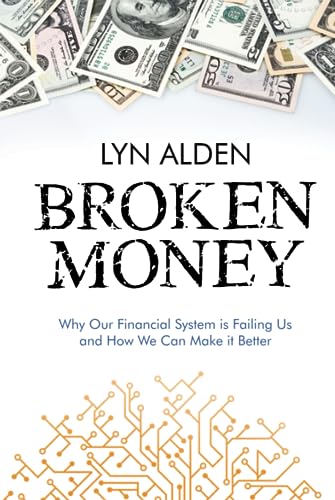
Broken Money by Lyn Alden
A deep dive into monetary history through a technological lens. Lyn Alden traces how innovations shaped money across centuries, examining commodity-based systems, modern fiat currencies, and emerging alternatives like Bitcoin.
What Makes Money Work?
Alden starts with the fundamentals: what actually makes something money? She breaks it down into key properties—durability, divisibility, portability, scarcity—and shows how different forms of money throughout history have excelled or failed at these.
The key insight? Money is a technology, and like all technologies, it evolves. What worked for ancient civilizations doesn’t necessarily work in a globally connected digital world.
The Fiat Experiment
One of the most eye-opening sections covers how we ended up with our current fiat system. Alden documents the shift from gold-backed currencies to pure government-issued money, explaining why this experiment—only about 50 years old—has led to persistent inflation and monetary instability.
“Many currencies are rapidly diluted, which continually devalues the savings and wages of the billions of people who live and work within those jurisdictions.”
She backs this up with real-world examples from Nigeria, Egypt, Brazil, and other nations experiencing currency crises. For people in developed economies, these stories serve as a warning of what unchecked monetary expansion can lead to.
The Network Effects of Money
Alden brings a unique perspective as an engineer turned financial analyst. She applies network theory to explain why certain forms of money win out over others. Money, like the internet, benefits from network effects—the more people use it, the more useful it becomes.
This framework helps explain both why the dollar dominates global trade and why Bitcoin has grown so quickly despite starting from zero.
Bitcoin as a Solution
The book builds logically toward Bitcoin as a potential fix for broken monetary systems. But unlike many Bitcoin books, Alden doesn’t just cheerlead. She evaluates Bitcoin against gold and other cryptocurrencies, acknowledging trade-offs and limitations.
Her analysis is grounded in engineering principles: What are Bitcoin’s actual properties? How does it compare to historical forms of sound money? What problems does it solve, and what problems remain?
Final Thoughts
“Broken Money” stands out because it doesn’t assume you already agree with the premise. Alden methodically builds the case that something is wrong with how money works today, traces the historical roots of these problems, and then evaluates potential solutions.
Whether you end up convinced by her conclusions or not, you’ll come away with a much deeper understanding of monetary systems and why they matter.