
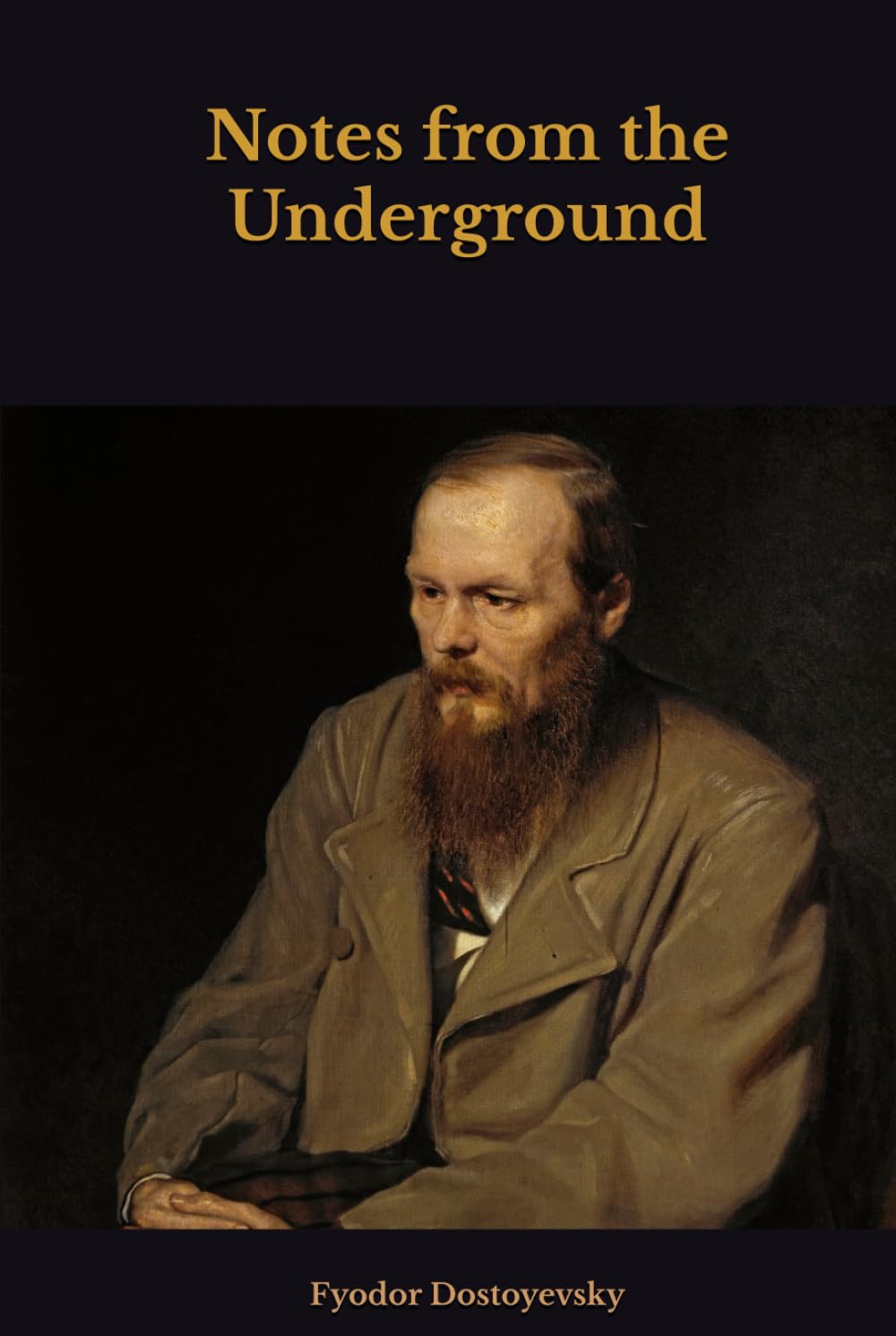
Notes from Underground by Fyodor Dostoevsky
The Underground Man is not someone you’d want to have a beer with. He’s bitter, contradictory, and painfully self-aware. He knows his flaws and still refuses to change. That’s the whole point.
The book is split into two parts. The first is a philosophical rant against reason, progress, and the idea that humans will always act in their own best interest. The second tells a story from the narrator’s past that shows just how far his self-sabotage goes.
On Free Will and Spite
The narrator argues that people don’t just want what’s good for them. Sometimes they want chaos. Sometimes they want to suffer. Not because it makes sense, but because it proves they’re free.
“What man wants is simply independent choice, whatever that independence may cost and wherever it may lead.”
He rejects the utopian idea that a perfect society could be built on rational self-interest. Humans aren’t machines. They’ll destroy their own happiness just to prove they can.
The Wall and Inaction
The Underground Man is paralyzed by over-thinking. He sees every angle, every consequence, every possible interpretation. So he does nothing. He calls himself more conscious than the “men of action” who simply act without questioning everything.
“I swear, gentlemen, that to be too conscious is an illness—a real thorough-going illness.”
There’s something uncomfortably relatable here. The trap of analysis paralysis. Knowing too much can become an excuse to do nothing at all.
The Liza Episode
The second part shows the narrator meeting a young prostitute named Liza. He delivers a passionate speech about her future, about dignity and redemption. For a moment, he seems almost noble. Then she shows up at his door, and he crumbles. His cruelty returns. He can’t accept genuine human connection because it threatens his carefully constructed self-image.
This is Dostoevsky at his most uncomfortable. The gap between what we say and what we do. The way wounded pride can poison everything.
Key Takeaways
- Rationality doesn’t fully explain human behavior. People act against their own interests out of spite, boredom, or the need to feel free.
- Excessive self-awareness can become a prison. At some point, you have to act despite uncertainty.
- The desire for control and the fear of vulnerability can destroy meaningful relationships.
- Suffering isn’t always something to be eliminated. Sometimes people cling to it as proof of their existence.
This book is not easy or pleasant. But it gets under your skin. It anticipates exstentialism by decades and challenges the comfortable belief that progress and reason will save us.